How to Capture Ideas Before They Disappear
Most ideas do not arrive when you are ready to work on them. They arrive while you are carrying groceries, stepping off a train, walking the dog, or trying to fall asleep. The hard part is not having the thought. It is saving enough of it without turning a small spark into a new task.
The goal is not to make a perfect note. It is to leave a useful trail back to the idea.
Use the smallest capture that will still make sense later
When you feel an idea arrive, resist the urge to explain all of it. A full explanation creates friction, and friction is what makes the thought disappear. Instead, record one of three things:
- A phrase: “coffee shop scene, argument about a missing photograph.”
- A question: “What would make the opening feel less predictable?”
- A sensory detail: “orange streetlight on wet pavement after the concert.”
Each is a coordinate, not a finished piece of work. You are giving your future self a way back into the moment.
Choose the format that matches the situation
Typing is useful when you are still and have both hands free. It is a poor fit when you are moving. Give yourself more than one way to capture an idea:
- Voice for motion. Say one sentence aloud when you are walking, driving, cooking, or carrying something. Speak naturally; the note does not need to sound polished.
- Text for precision. Use a short line when a particular word, title, or question matters.
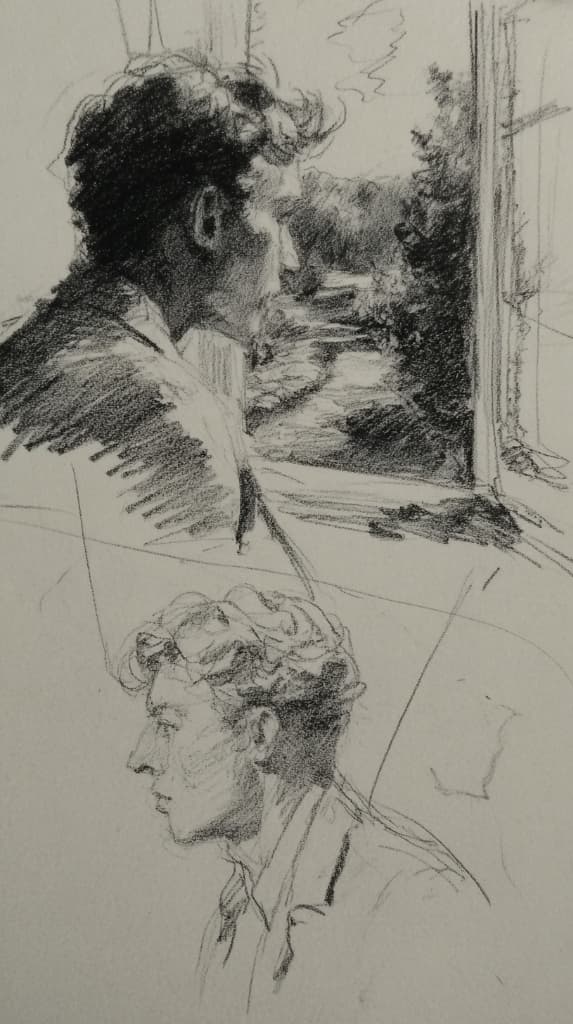
- A photo for context. Save the image that caused the thought: a sign, a book page, a colour, a room, a sketch. Add one line about why it caught you.
The point is not to collect everything. It is to remove the excuse that the only valid capture method is opening a blank document.
Add one detail that makes the note reusable
The first note can be tiny. If you have another ten seconds, add context that your future self cannot infer from the words alone:
- Where were you?
- What were you doing just before the thought appeared?
- What does the idea connect to?
- What should you try next?
For example, “podcast idea: people collect ordinary sounds from home” becomes more useful as “podcast idea: people collect ordinary sounds from home — came up while hearing the washing machine; could begin with a 30-second sound collage.” That is enough to restart the thought later.
Do not organise while you are capturing
Tags, folders, priorities, and titles are useful later. They are often harmful in the moment. If you pause to decide where an idea belongs, you have changed the job from noticing to administering.
Capture first. Return later.
Momento is built for this sequence: save the voice note, line, or photo while the thought is fresh, then revisit it when you have more attention. You do not need to decide whether it is a project, a journal entry, or nothing at all on the first pass.
A five-minute return ritual
Once or twice a week, open the notes you captured without trying to make a complete archive. Ask three questions:
- Which note still has energy?
- Which note connects to something I already care about?
- What is the smallest next action for the one worth keeping?
That action may be “write three more lines,” “send this to a collaborator,” or “take a reference photo.” The rest can remain as fragments. Capturing an idea does not obligate you to develop it.
The best capture system is the one you can use when life is already happening. Make the gesture small, keep the original atmosphere intact, and leave yourself a clear way back.